
Why Won’t My Plantar Wart Go Away?
(And How to Finally Walk Pain-Free)
Plantar Warts are notoriously stubborn, painful, and highly resistant to drugstore remedies. At
The Foot Center, we see patients every day who have spent months trying to DIY their foot pain away.
Keep reading to learn the medical reality of why your plantar wart won’t go away, and how our team can finally eliminate it at the root.
What is a Plantar Wart? (And Why Does It Hurt So Much?)
Warts are caused by the Human Papillomavirus (HPV). The virus thrives in warm, moist environments (like public pool decks, gym locker rooms, and communal showers) and enters your foot through microscopic cuts or scrapes in your skin.
While warts can grow anywhere on the body, plantar warts (warts on the soles of your feet) behave differently:
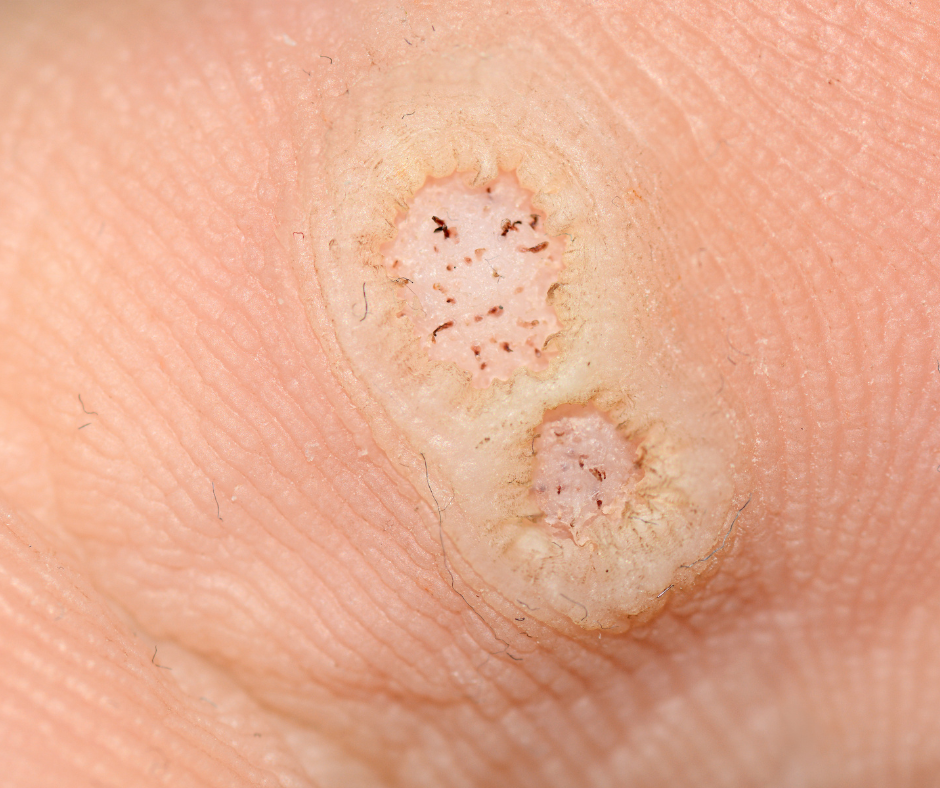
- The “Inward” Growth: Because you are constantly walking and standing on them, the pressure of your body weight forces the wart to grow inward, deep beneath a thick layer of hard, callused skin.
- The Pain: As the wart pushes deeper into the dermis, it presses directly against sensitive nerve endings, creating that sharp, stabbing “pebble” sensation with every step you take.
The Symptom Checklist: Is It a Wart or a Callus?
Because they grow inward, plantar warts are frequently mistaken for standard calluses. Use this checklist to spot the difference:
- The “Black Dots”: If you look closely at the rough skin, do you see tiny black pinpoints? People often call these “wart seeds,” but they are actually tiny, clotted blood vessels supplying nutrients to the wart.
- The Squeeze Test: A callus usually hurts when you press directly down on it. A wart typically hurts more when you squeeze it from the sides.
- Bleeding: Warts have an active blood supply. If you scratch or pick at the rough skin, it will often bleed easily.
- Clusters: The virus can easily spread to surrounding skin, creating a tightly packed cluster known as “mosaic warts.”
Why Over-The-Counter Treatments Keep Failing
If you have been battling a wart for months, it’s time to throw away the drugstore freezing spray.
- The Temperature Problem: Over-the-counter aerosol freezing kits do not get cold enough to penetrate the thick, callused skin on the bottom of your foot. They freeze the surface, but the root of the virus survives completely unharmed.
- The Acid Burn: Drugstore salicylic acid pads are non-specific. They often eat away and burn the healthy skin surrounding the wart while failing to reach the virus deep inside the lesion.
The Professional Fix at The Foot Center
Treating plantar warts effectively requires destroying the virus-infected tissue while minimizing your discomfort. Our doctors tailor your treatment plan to ensure the best possible results with the lowest risk of recurrence.
Our professional, clinical-grade options include:
- Advanced Cryotherapy: We use professional liquid nitrogen that reaches significantly colder temperatures than drugstore sprays, effectively freezing and destroying the virus at its core.
- Prescription Topical Medications: High-potency, targeted peeling medications designed to strip away the infected layers of skin over time safely.
- Laser Treatment: We utilize precise laser energy to cut off the blood supply to the wart, essentially starving the virus until it dies and flakes away.
- Minor Surgical Removal: For highly stubborn or painful warts, our podiatrists can numb the area and carefully excise the infected tissue right in the office, allowing you to walk out comfortably.
Don’t Let a Wart Dictate Your Step
You do not have to live with the pain, and you shouldn’t risk spreading the virus to your family members by waiting. Our team is ready to help!
The Foot Center, Inc. provides comprehensive podiatric care for all your foot and ankle needs. Led by Dr. Noel Patel and Dr. William Eng, our team provides personalized treatment plans using the latest techniques and technology. Contact us today to schedule an appointment at one of our five convenient locations: Richmond, Colonial Heights, Henrico-East End, Chester, and Kilmarnock.